The WWF is run at a local level by the following offices...
- WWF Global
- Adria
- Argentina
- Armenia
- AsiaPacific
- Australia
- Austria
- Azerbaijan
- Belgium
- Bhutan
- Bolivia
- Borneo
- Brazil
- Bulgaria
- Cambodia
- Cameroon
- Canada
- Caucasus
- Central African Republic
- Central America
- Central Asia
- Chile
- China
- Colombia
- Croatia
- Democratic Republic of the Congo
- Denmark
- Ecuador
- European Policy Office
- Finland
SCALING SUPPLY CHAIN
CLIMATE ACTION INITIATIVE
The Scope 3 UNLOCK – Scaling Supply Chain Climate Action Initiative is designed by WWF-Hong Kong to help corporates measure, disclose, and reduce Scope 3 emissions across their operations and supply chains.
Building on the success of the Low Carbon Manufacturing Programme (LCMP), this initiative extends climate action beyond Scope 1 and 2 emissions to address the largest share of corporate carbon footprints.
The Scope 3 Unlock initiative enhances companies’ understanding of Scope 31 emissions and enables collaboration with suppliers to prepare for critical challenges — ranging from data gaps and inconsistent internal processes2 to credible reporting. It provides tools adapted from proven LCMP and LOOPPLUS experiences, alongside collaborative frameworks, capacity-building support, and progress and peer sharing.
The initiative kickstarts shared action through pledges, readiness self-assessment, workshops, a collective learning and resource hub — scaling value-chain collaboration to unlock supplier-specific activity-based emissions insights beyond generic spend-based estimates.
Joining Scope 3 Unlock helps companies contribute to the city’s pathway towards net zero emissions by 2050.
-
Respond to regulations: Fulfil global and local climate related regulatory requirements and enhance readiness for evolving international standards and investor attention with accuracy, consistency and credibility.
-
Navigate Scope 3 with confidence: Access practical guidance aligned with expanding regulatory expectations to identify and prioritise high impact value-chain emissions, building on your existing climate efforts.
-
Access proven tools immediately: Use LCMP and LOOPPLUS checklists, questionnaires, and frameworks to support reliable Scope 3 information collection and improve supplier engagement.
-
Build strong partnerships: Engage suppliers through workshops and online resources to improve the quality of emissions information and scale climate solutions.
-
Multiply collective impact: Collaborate with peers to enhance visibility into emissions information and sources across value-chains through shared learning.
-
Stand out and attract growth: Differentiate in global competition and strengthen market appeal by aligning with growing customer demand for credible sustainability practices.
-
Demonstrate vision to investors: Showcase long-term resilience and forward-looking strategy to shareholders and investors through transparent Scope 3 engagement and reporting.
- Select ONE of the “Pledge letter” at your favourite choice
- Complete and sign the “Pledge letter”
- Return the completed letter to lcmp@wwf.org.hk
- How you collect and validate data from different departments and suppliers (e.g. finance, procurement, logistics, operations).
- How responsibilities and approvals are assigned (who owns which category of Scope 3, who signs off on numbers, who talks to suppliers).
- How often you review and update emissions data and assumptions.
- How you integrate climate topics into procurement, budgeting, and risk management (e.g. including emissions in supplier selection, contract clauses, KPIs).
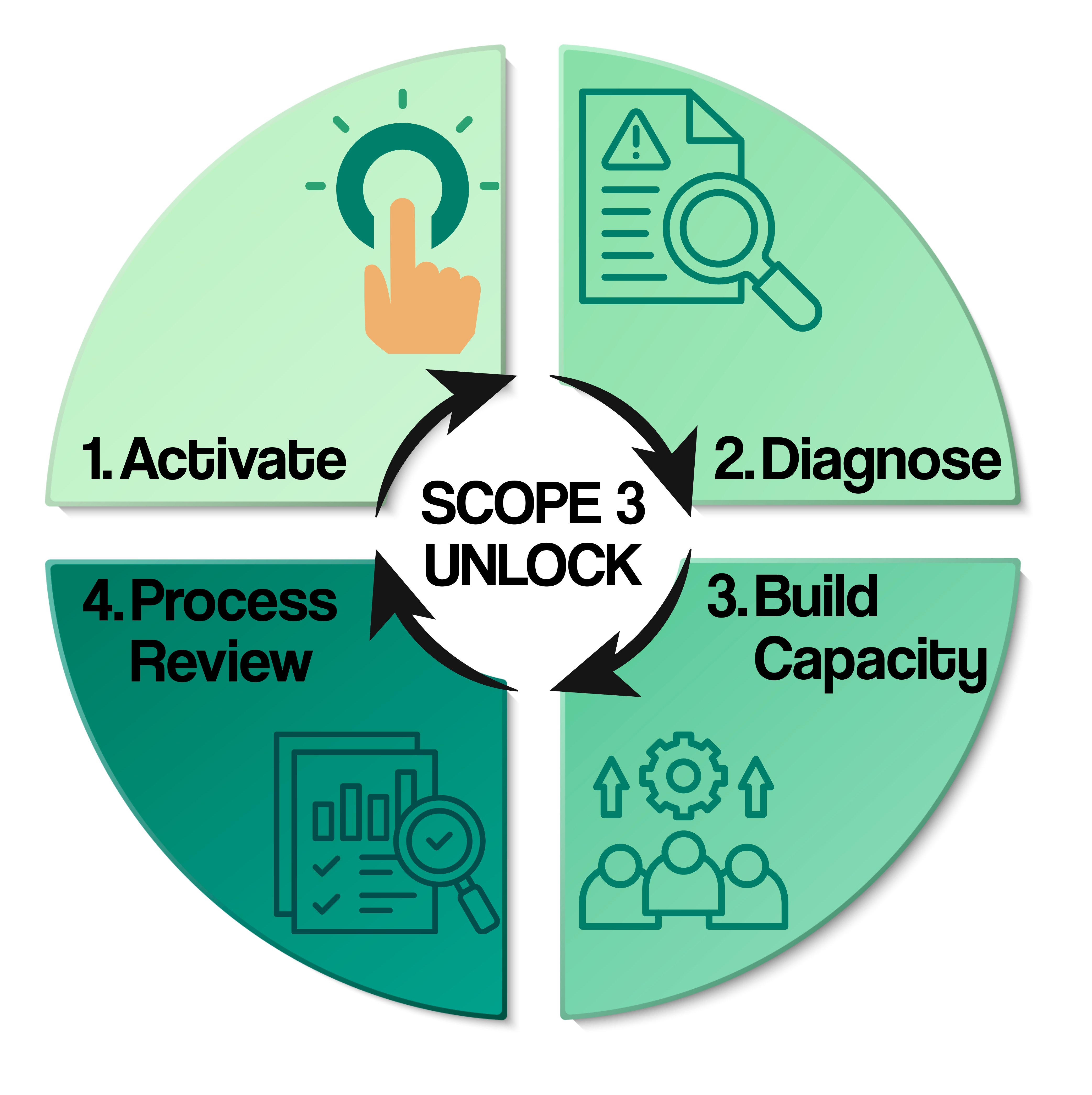
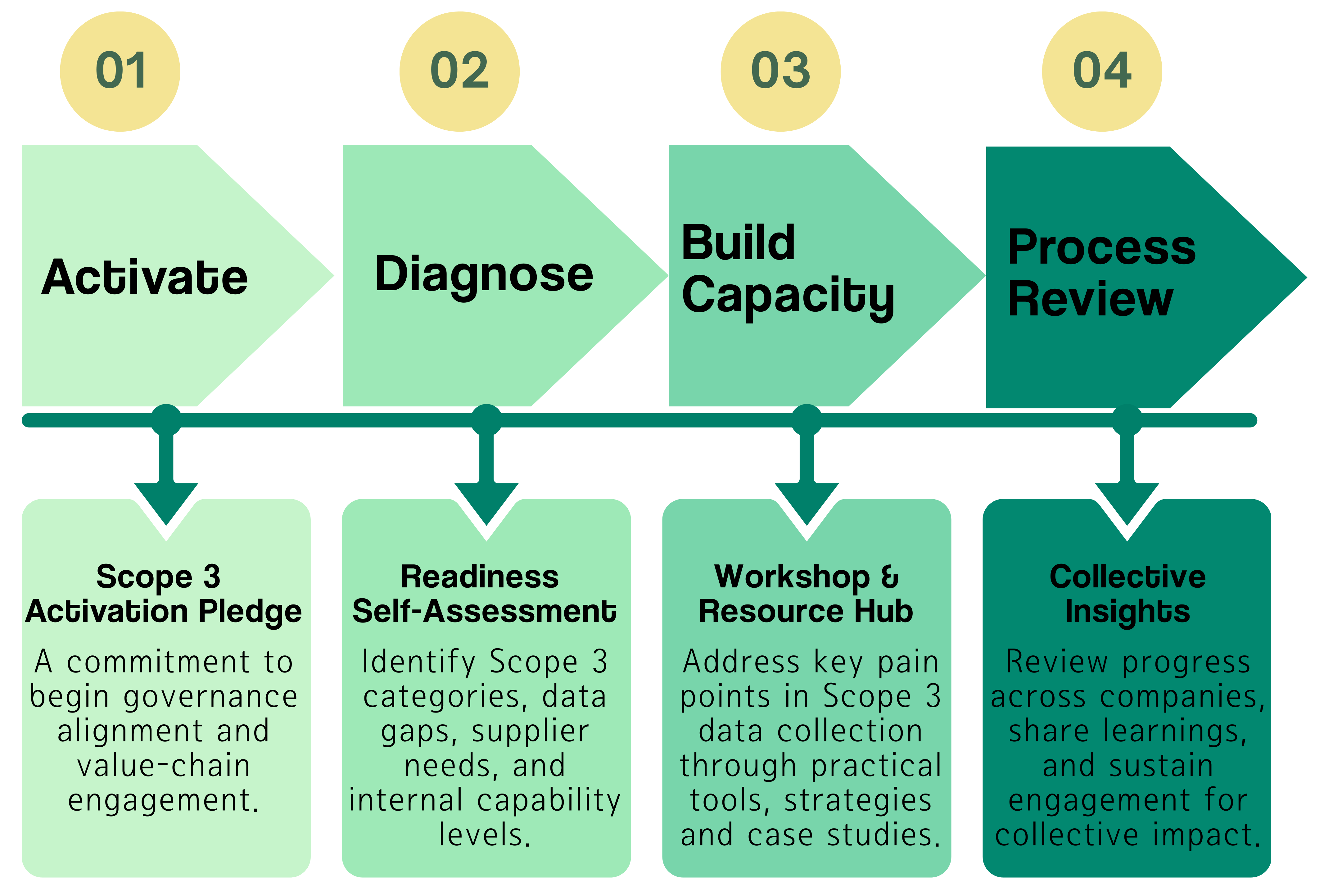
Companies follow a four‑step approach, beginning with an activation pledge and a self‑assessment to diagnose Scope 3 priorities and readiness. Capacity is built through workshops and a resource hub, with regular progress reviews to support continuous improvement and collective impact.
-
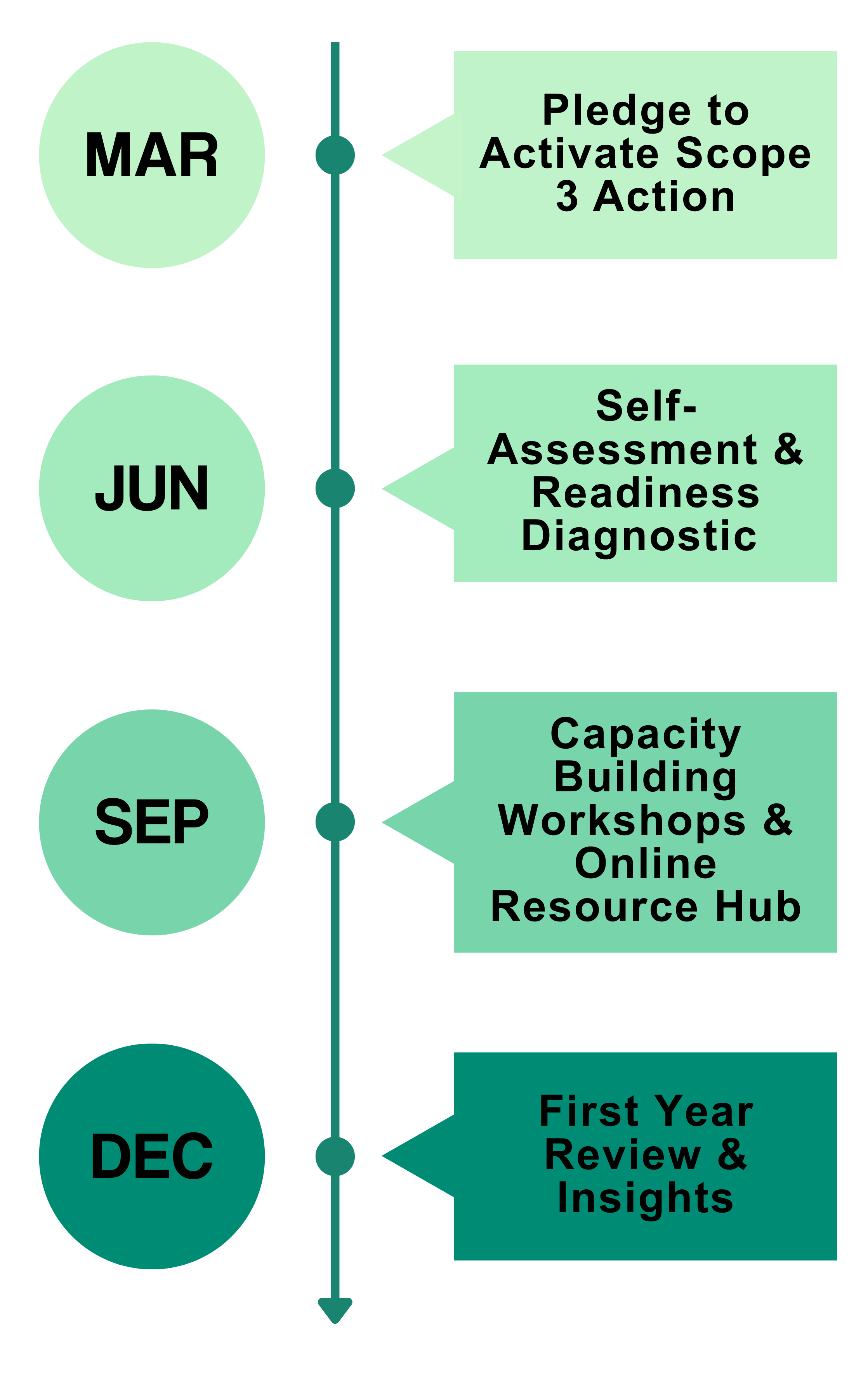
Pledge to Activate Scope 3 Action (March–June, 2026)
Participating companies complete and return the activation pledge to WWF by June, signalling commitment to begin engagement.
-
Self‑Assessment & Readiness Diagnostic (June–August, 2026)
Pledged companies will complete a self‑assessment using a structured checklist to evaluate governance arrangements, data readiness, supplier engagement capabilities, and priority Scope 3 categories, and submit the completed assessment to WWF by August.
-
Capacity Building Workshops (September, 2026) & Online Resource Hub
Pledged companies will be invited to in‑person workshops held in September, providing access to practical tools, shared resources, supplier-engagement materials, data-collection guidance, Scope 3 emissions categories, and case studies.
-
First-Year Review & Insights (November–December, 2026)
Progress updates are consolidated, with insights and learnings reviewed and published in November–December to support ongoing engagement and collective impact.